Wood, parquet and laminate floors: care in a humid coastal home
Too much water is the main enemy of wooden floors on the Costa del Sol. How to clean parquet, engineered wood and laminate without swelling or dull patches.
· 2 min read
Why wood behaves differently on the coast
Most floors in Costa del Sol homes are tile or stone, so a wooden or laminate floor is often a deliberate, expensive choice in a bedroom, a loft or a whole apartment. Wood absorbs and releases moisture with the air around it, and sea-side winters are damp.
That is why water is the real enemy. A soaking mop can push moisture into the joints, where boards swell at the edges, lift or open gaps once they dry again.
Find out what your floor actually is
Solid parquet, engineered wood and laminate (tarima flotante) look similar but are cleaned differently. Laminate has a photographic top layer over fibreboard, so it is the least tolerant of water. Engineered and solid wood are usually finished with varnish, oil or wax, and the finish decides what you can use.
If you do not know the finish, check the installer's paperwork or ask them. As a rule, a varnished floor can take a barely damp mop, while an oiled or waxed floor needs products made for oil or wax and will mark if you use a general degreaser.
A routine that protects the finish
Dust is abrasive, so the most useful habit is dry: sweep with a soft broom or vacuum with a hard-floor head, switching off the rotating brush that can scratch. Do this often, especially near terrace doors where sand and grit come in.
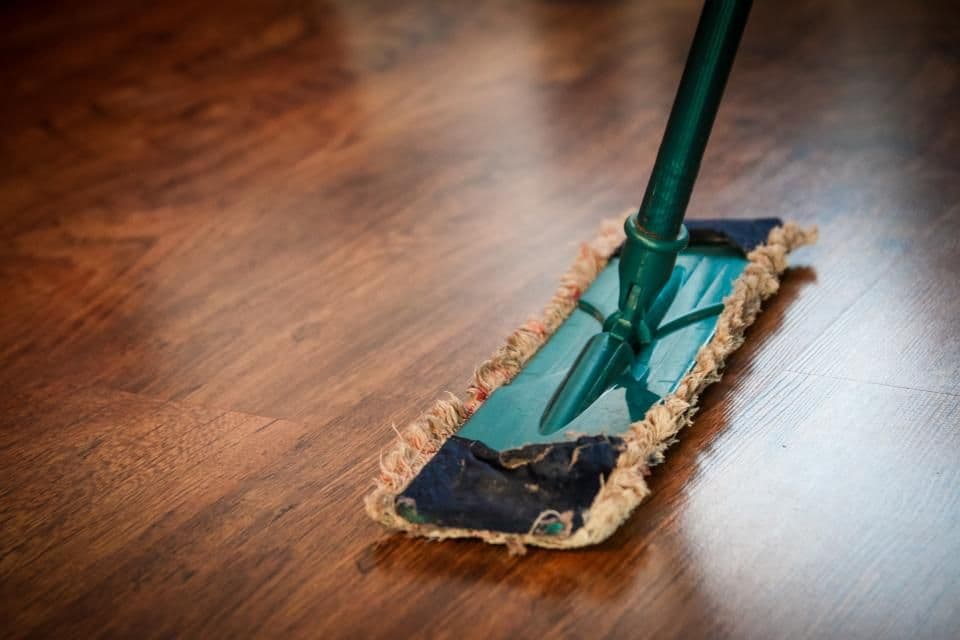
For washing, wring the mop or microfibre pad until it is only just damp, use a small amount of neutral, pH-balanced cleaner, work along the grain and dry the floor straight away with a clean cloth. Wipe up spills immediately, and never use steam mops on wood or laminate.
Marks, scratches and dull patches
Felt pads under chairs and sofa legs prevent most scratches, and a mat inside every outside door stops grit at the source. Lift furniture rather than dragging it, and avoid rubber-backed rugs, which can mark some finishes.
Dull patches usually come from residue: too much product, or soap-based cleaners that leave a film. Switching to a little neutral cleaner and rinsing the cloth often tends to restore the look. Deep scratches or worn varnish are a job for a flooring specialist, not a stronger cleaner.
Keeping humidity steady
Stable air is kinder to wood than any product. Ventilate for a few minutes every day, use air conditioning in dry mode or a dehumidifier in damp months, and avoid leaving the home shut up for weeks with no air movement.
If you are away for long periods, regular visits to open windows briefly and check for damp patches help. At Lavanda we clean wooden floors with minimal moisture and suitable products, and we will tell you honestly if a floor needs a specialist rather than a clean.